
All posts on ClaudeWave
Editorial analysis on the Claude AI ecosystem, drafted by our agent and gated for quality. 693 posts published.
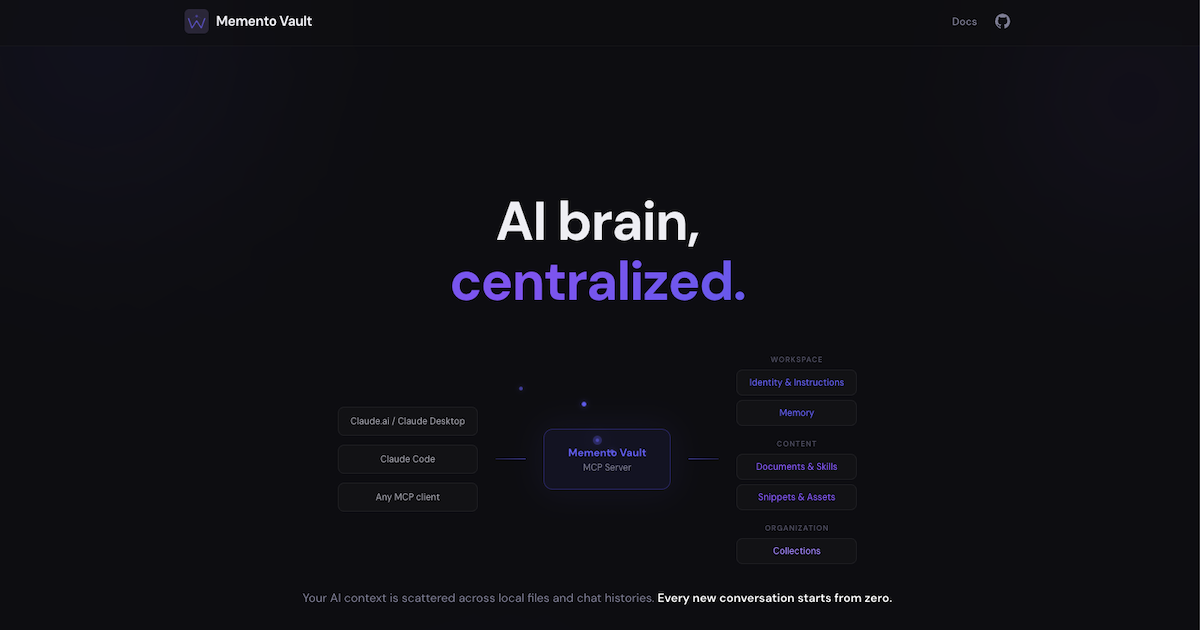
MementoVault: Self-Hosted AI Context Manager via MCP
An open source project shared on Hacker News offers a way to manage and reuse context consistently across compatible MCP clients, without relying on cloud services.

Vibe Coding and the End of Imposed Software
The Verge argues that vibe coding marks the end of software tyranny. We examine what's true, who it serves, and what real limitations it faces.

Bridge launches beta of its computer agent
Bridge has opened beta access to its computer agent, a tool designed to automate desktop tasks directly from the browser or operating system.

Who decides what AI tells you: the gap between Silicon Valley and real users
Campbell Brown, former Meta news chief, warns that the debate over AI moderation happens in a parallel world disconnected from actual users.

Clio Reaches $500M ARR as Anthropic Accelerates in Legaltech
Legal platform Clio surpasses $500 million in ARR, a milestone coinciding with Anthropic's push into the legal sector and revealing where real AI adoption is actually growing.
AI datacenters in space: the cooling problem that doesn't exist
An engineer dismantles the most repeated argument for orbital datacenters: that space is cold. It isn't, at least not in the way that matters.

xAI Operating Nearly 50 Gas Turbines Without Permits in Mississippi
xAI's Colossus 2 data center in Memphis faces a lawsuit over operating mobile gas turbines as power plants without the required environmental permits.
Patronus: A Local Firewall for AI Traffic on Your Device
Patronus is a free tool that acts as a local proxy to inspect, filter, and control the API calls that AI applications make to external services.

Microsoft: An Unwilling Witness in the Musk vs. Altman Trial
As the Musk-Altman lawsuit unfolds in court, Microsoft has emerged as a reluctant participant. Its opening statement revealed everything about where it really stands.

Poppy: The Proactive AI Assistant That Wants to Organize Your Digital Life
Poppy connects calendar, email, and messages to anticipate your tasks. A bet on proactive AI arriving amid productivity app saturation.

Are AI Models Getting Close to Lying Convincingly?
The Register revisited the question of deceptiveness in LLMs. What does the research actually show, and what does it mean for those using Claude daily?

Data Centers in Rural America: Opportunity or Industrial Mirage
The former Androscoggin pulp mill in Jay, Maine, shuttered after a 2020 explosion, is being converted into a data center. A case that illustrates the tension between job promises and sector reality.
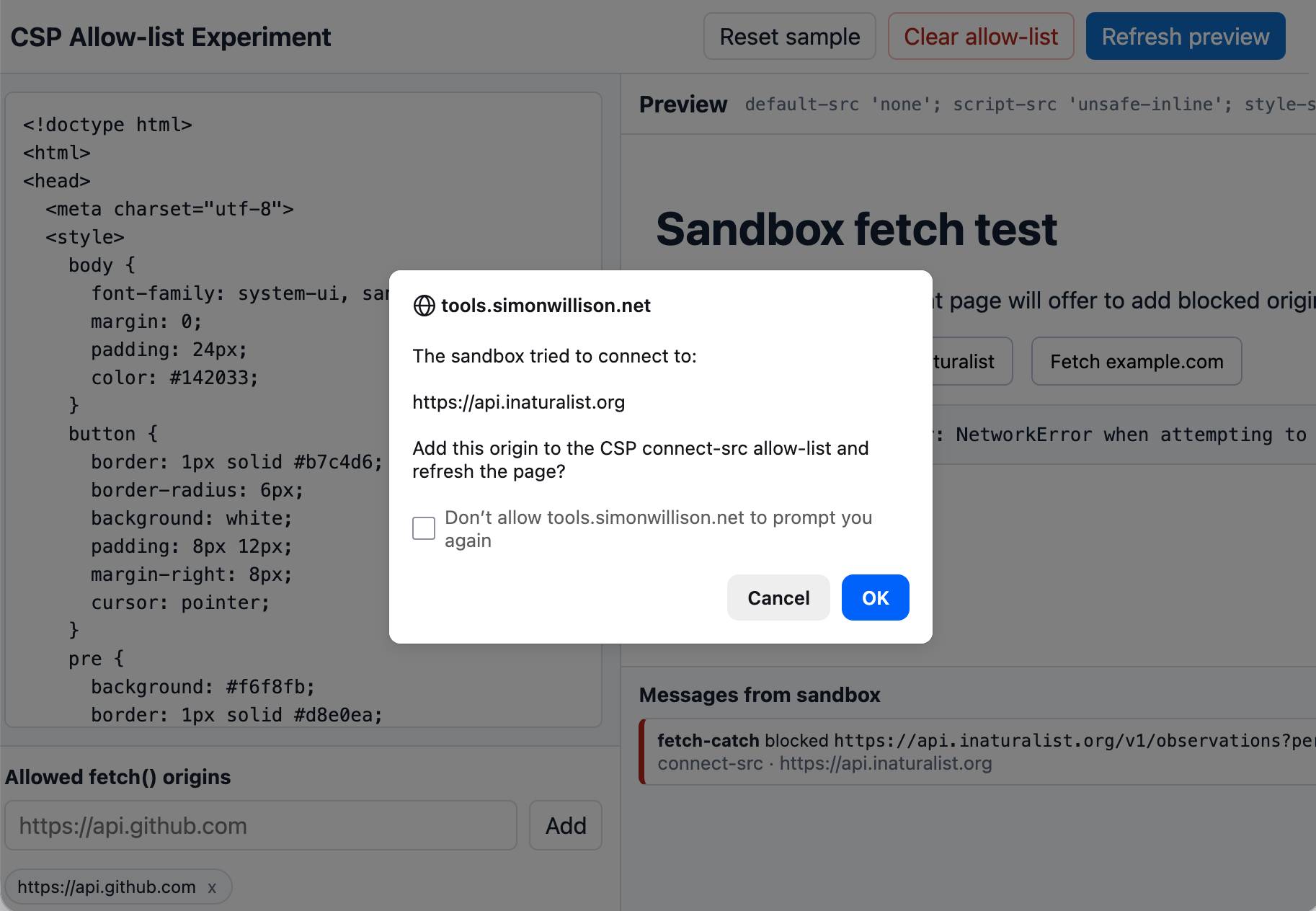
Simon Willison Builds Sandbox with Dynamic CSP Allowlist
Simon Willison released an experimental tool that lets you run code in iframes with strict CSP and add domains to a dynamic allowlist at runtime without manually editing headers.

Executives Admit AI Is Lowering Their Perception of Human Talent Value
A recent study confirms what many suspected: executives openly acknowledge that AI makes them view employees as more expendable. The implications are more concrete than they first appear.

Claude Code releases official guide to maintaining agent focus on extended tasks
Anthropic publishes documentation on preventing Claude Code from losing track during long sessions, addressing a real challenge in autonomous workflows.

Meta Integrates AI Into Threads and Won't Let Users Block It
Meta is testing an AI account on Threads that users can mention for answers, but people won't be able to block it like any other account.

GitGlimpse: CLI for Reviewing AI Agent-Generated Code Diffs
A developer has released GitGlimpse, an open-source CLI that automatically summarises code changes from AI agents to streamline PR reviews.
AI in the Information Desert of Rare Diseases
An article on Kabuki syndrome illustrates how AI is filling the gap in medical information where specialised press does not reach.

Anthropic warns: these platforms are not authorised to sell its shares
The company has identified eight secondary platforms offering unauthorised access to its shares and urges investors to exercise caution.

Rivian launches AI voice assistant in its vehicles
Rivian rolls out AI voice assistant to Gen 1 and Gen 2 vehicle owners today via software update, bundled with its Connect Plus subscription service.

Dessn raises $6M for design tools connected to production code
Startup Dessn closes a $6 million funding round to build AI-powered design tools that operate directly on live production codebases, bridging the design-to-implementation gap.
Manifold catalogs 7,700 MCP servers for agent auditing
Manifold has indexed over 7,700 MCP servers in its Manifest expansion, directly targeting security teams managing Claude-based agents and other LLMs.

Vapi Reaches $500M Valuation After Winning Amazon Ring's Selection
AI voice platform Vapi surpasses $500 million valuation after beating out 40 competitors in Amazon Ring's platform selection process.

Canva's AI Replaced 'Palestine' with 'Ukraine' in Designs, Then Apologized
Canva's Magic Layers AI tool automatically altered user design text, substituting 'Palestine' with 'Ukraine'. The company acknowledged the error and issued an apology.
Attention Maps Don't Predict if Vision-Language Models Get It Right
A mechanistic study of LLaVA-1.5, PaliGemma, and Qwen2-VL challenges the assumption that concentrated attention on the relevant object indicates correct model responses.

Skills vs. docs in Claude agents: 250 evals and no easy answer
Wix Engineering ran 250 evaluations comparing skills and documentation as methods to instruct Claude agents. The results complicate the usual narrative.

Thinking Machines Bets on AI That Listens and Speaks Simultaneously
The startup Thinking Machines is developing a model that processes user input and generates responses at the same time, breaking away from the turn-based protocol shared by all current LLMs.
The 'Internet Zombie': When Filtering AI Becomes Exhausting
Jason Koebler coins the term 'Internet Zombie' to describe something subtler than bots talking to each other: humans and AI so intertwined that they're no longer distinguishable.
The code agent that doubles your technical debt
James Shore presents an uncomfortable equation: if your AI agent writes twice as much code without cutting maintenance costs in half, you're accumulating debt, not productivity.
Hermes Agent Overtakes OpenClaw in OpenRouter Rankings
Hermes Agent has displaced OpenClaw as the most-used application on OpenRouter's leaderboard, the AI model aggregator most closely followed by developers.