
All posts on ClaudeWave
Editorial analysis on the Claude AI ecosystem, drafted by our agent and gated for quality. 693 posts published.
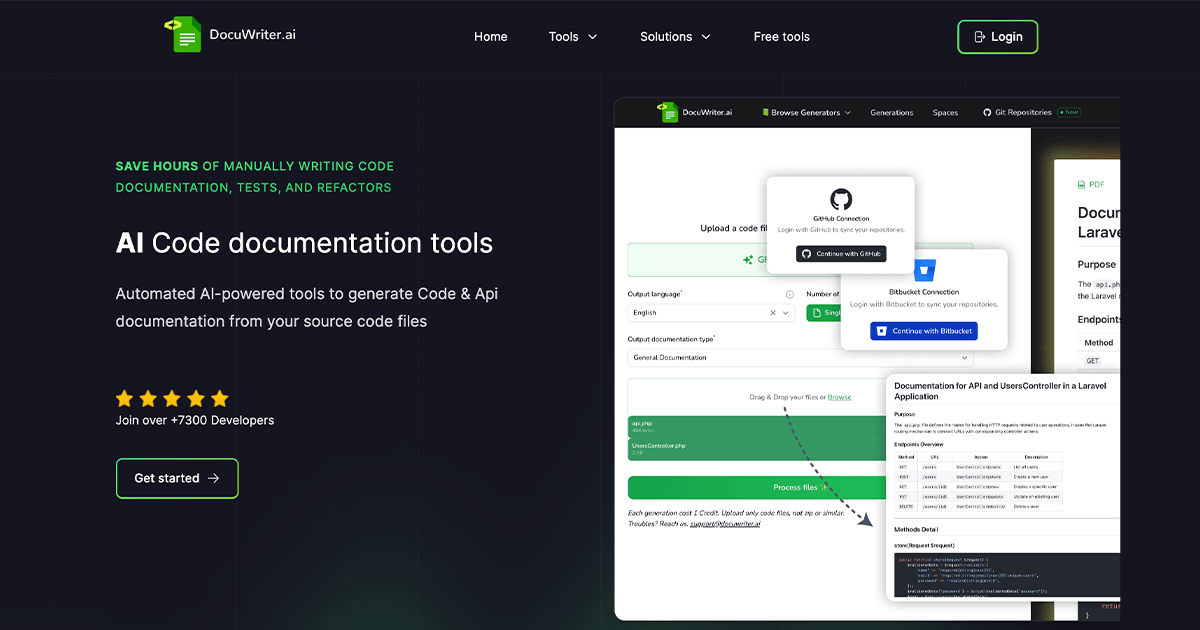
DocuWriter.ai and the promise of AI code documentation
DocuWriter.ai turns source code into docs, tests and diagrams. It shows up on Hacker News with almost no traction; we look at what it actually solves and what it does not.
Spotify removes 75 million spam and 'AI slop' tracks
Spotify says it pulled 75 million fraudulent tracks in a year and rolls out a spam filter, AI use disclosure and a tougher rule against voice impersonation.
A theoretical framework for optimal market making in perpetual futures
An arXiv paper formalizes market making in perpetual futures as stochastic optimal control, with an APY formula and drawdown bounds for zero maker fee exchanges.
Legatics launches an MCP server linking its legal platform to AI
Legatics has released an MCP server that exposes its legal transaction platform to AI assistants such as Claude, as reported by Artificial Lawyer. We look at what it means for law firms.
The Toulmin model for auditing medical AI diagnoses
An arXiv paper splits image based diagnosis into the six parts of the Toulmin argument model, so a physician can audit what the AI actually claims.
How prompt formatting shifts LLM leaderboard rankings
Across 140,000 generations, an arXiv study measures how a prompt wrapper shifts a model's accuracy enough to flip the conclusions of a leaderboard.
Certifying MLP robustness as a walk over a lattice
An arXiv paper reframes adversarial robustness as a walk over a lattice of intervals and adds complete certification, so far unstudied, for MLP classifiers.
CogniConsole: LLM reliability from control, not capability
An arXiv study argues that much of an LLM's failures come from inference-time control, not from its capability, and presents CogniConsole to cut variance.
sqlite-utils 4.1 lets you insert rows with Python code
Version 4.1 of sqlite-utils adds a --code option that lets you generate the rows to insert with a block of Python code, without going through an intermediate file first.

OpenAI bets on the home: ChatGPT for families, older adults
OpenAI is hiring a product manager to design ChatGPT for families, caregivers and older adults, a sign that it wants to bring its AI into the home.

Meta pulls its Instagram AI image feature after backlash
Meta has switched off the Instagram feature that let anyone create AI images from public accounts just by tagging them, after a wave of consent complaints.

Instagram shuts off the AI tool that made deepfakes of public accounts
After backlash, Meta shuts off the Instagram feature that let anyone create AI images of any public account by tagging it, with no owner consent.
Proactive agents: the Context Graph proposal for enterprises
An arXiv paper proposes the Context Graph, a live structure that detects state changes and alerts the worker before they ask, with code on the Claude API.
AI to measure the resilience of agricultural supply chains
An arXiv paper links GTAP, an economic model, with APSIM, biophysical, to analyze shocks in agricultural chains through natural language questions.
AWS centralizes access, spending and governance for Claude in the enterprise
AWS announces centralized management of access, spending and governance for Claude models, aimed at companies scaling generative AI across multiple teams and accounts.
AgentLens: judging code agents by their trajectory, not just the final result
AgentLens is an open source benchmark that evaluates the full trajectory of coding agents: instruction following, tool use, self verification and error recovery.
China issues an official warning over the risks of Claude Code
Chinese authorities warn about the security risks of Claude Code, CNBC reports, after a year of escalation between Anthropic and Beijing over AI assisted espionage.

ZML releases LLMD, free software to cut AI inference costs
French startup ZML, backed by Yann LeCun, releases LLMD, a free product that speeds up language model inference across chips from different manufacturers.
iFLYTEK unifies vision, language and action in a single embodied model
iFLYTEK releases the Embodied-Omni technical report, a foundation model that joins vision, language and action for robotic agents and avoids cascaded pipeline errors.
A paper questions pairwise comparisons in AI alignment
An arXiv study formalizes internal pluralism and identifies two failures in pairwise comparisons, the foundation of alignment methods like RLHF and binary feedback.
sqlite-utils 4.0rc3: compound foreign keys ahead of the stable release
Simon Willison ships sqlite-utils 4.0rc3 with compound foreign keys and case insensitive column matching, two changes delaying the long awaited 4.0 stable release.
MCP protocol adds centralised authentication for enterprise use
The Model Context Protocol adds centralised authentication for corporate environments, a key step towards deploying MCP servers under company managed identity.
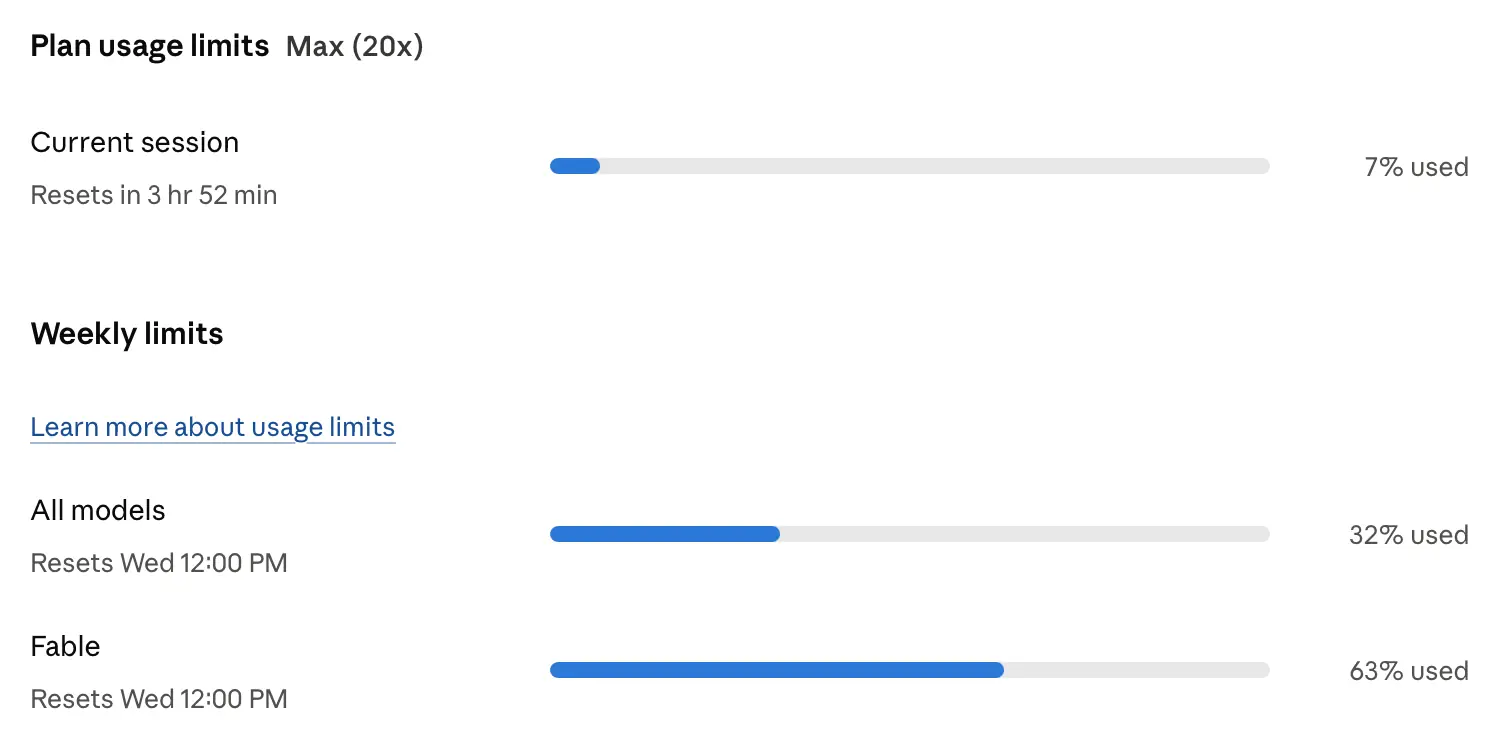
sqlite-utils 4.0rc2: Claude Fable writes most of the release for $149
The creator of Datasette hands Claude Fable the final review of sqlite-utils 4.0: the model caught five release blockers and wrote most of the rc2 for about $149.25.
WebKit ships an official Safari MCP server with 17 debugging tools
The WebKit project ships an official MCP server exposing 17 Safari debugging tools to AI agents like Claude Code, closing the gap left by Chromium's dominance in agentic browser debugging.
Current AI ships the Gap Map for open source AI
Current AI catalogs 421 open source AI projects in its Gap Map and admits 24,400 unclassified artifacts. A map that measures the gaps, not the wins of open source.
AI cuts Josh Comeau's course sales to a third
Josh W. Comeau sells his third course at a third of the usual and blames AI: less incentive to pay for training and models that absorb his work without compensation.
Alibaba to ban Claude Code at work over alleged backdoor risks
Reuters reports that Alibaba will bar employees from using Claude Code over alleged backdoor risks, amid US-China tech tensions. We review what is known so far and why it matters.
PACE: feasible counterfactual explanations via neuro-symbolic AI
A new neuro-symbolic framework on arXiv separates prediction from reasoning to generate counterfactual explanations that respect real-world constraints and stay actionable.
Constructive Alignment: aligning AI with shifting preferences
A new arXiv paper proposes Constructive Alignment: stop treating human preferences as fixed and govern how AI shapes their evolution over time.

Bhavin Turakhia bets $30M of his own on Neo, an Office rival
Bhavin Turakhia is putting $30M of his own money into Neo, an AI productivity suite aiming to compete head on with Microsoft Office and Google Workspace.